
Learning Beyond the Classroom
Think Bigger, Learn Better: The World Olympiad Foundation Approach
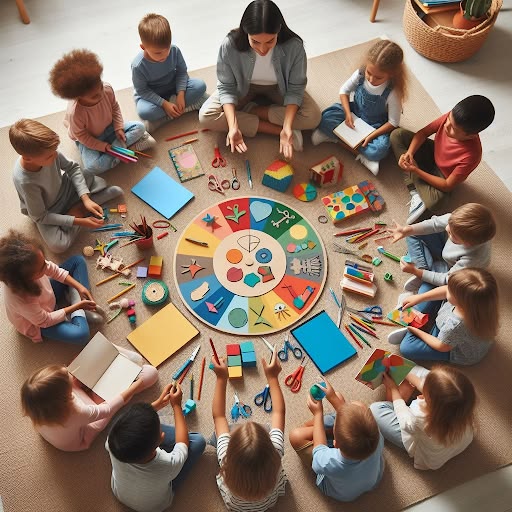
Introduction: Learning Beyond the Classroom
Every child has a desire to explore, ask questions, and understand how the world works. Education becomes more meaningful when students are encouraged to think instead of simply memorising facts. This is the idea behind the learning approach of the World Olympiad Foundation.
Learning through the Olympiads provides new dimensions to various topics. This type of learning enables students to link what they learn in school to real-world scenarios and instills confidence in themselves. Moreover, students are able to prepare for Olympiad exams from home using a structured practice method.
The idea is not merely to succeed in a test. The idea is to make students into learners who love finding solutions to problems.
Step 1: Understand the Purpose of Olympiad Learning
At the outset of preparation, students need to understand why they will need to undertake Olympiad education. Students are encouraged to put to use all that they have learned so far, observe patterns, and spend some time analyzing before giving answers.
The problems given are generally very different from the problems in class. These problems encourage students to use knowledge and concepts learned in various ways.
Some of the benefits of Olympiad exams include improved confidence, enhanced ability to concentrate, and a greater understanding of subjects. These tests also allow students to find out the areas in which they excel and the areas where improvement is required. It is easy for parents to create such an environment at home and make the learning process interesting without converting the whole thing into homework.
Step 2: Build a Strong Foundation First
Students do well when they know the fundamentals. Prior to dealing with difficult problems, students should revisit the fundamentals they have been taught in class.
- Reading the subject carefully.
- Understanding the concept in their own words.
- Solving simple foundational problems.
- Attempting multi-step reasoning questions gradually.
Such an approach helps in building the fundamental skills of subject knowledge and logical reasoning among students. It makes them feel less afraid of tackling novel problems. In the Olympiad learning approach, comprehension is stressed more than rote learning—when students know why the answer is right, they can apply the concept elsewhere.
Step 3: Make a Practical Study Plan at Home
A realistic timetable makes preparation much simpler. Students need not prepare for long hours each day. It is always better if they prepare in short bursts, and in between studies they should have time to play and sleep.
| Day | Learning Activity |
|---|---|
| Monday | Revisit an important concept. |
| Tuesday | Prepare and solve questions on topics. |
| Wednesday | Solve logical reasoning questions. |
| Thursday | Revisit difficult questions. |
| Friday | Take a short practice test. |
| Saturday | Correction and analysis of answers. |
| Sunday | Light revision or a fun learning activity. |
Such a timetable helps students prepare for Olympiad exams at home without stress. Keep this schedule flexible and adapt it to the child's age and studying capacity. For additional guidance or study resources, families can contact our support team.
Step 4: Learn Through Questions and Real-Life Examples
Children grasp concepts quickly when they can relate them to something familiar. For example, when going shopping, children learn about numbers; when looking at a plant, questions regarding science arise; when reading stories, children start predicting outcomes.
Such experiences build up critical thinking skills for students. Parents should teach their children to ask reflective questions:
- "What do I know?"
- "What am I missing?"
- "Is there any other way to find out?"
- "How can I prove it?"
This habit helps build problem-solving skills for students. Parents should not give answers to children immediately, but only hint at possible ways toward a solution.
Step 5: Explore Different Subjects
Olympiad learning helps children discover interests across a range of subjects, each offering a distinct way to practice thinking and understanding:
- Science (Observe and Explore): Exploring the Science Olympiad encourages students to connect scientific concepts with the world around them—such as noticing how shadows change during the day.
- Mathematics (Find Patterns): Gives learners opportunities to explore number patterns, puzzles, and logical challenges by focusing on understanding the steps rather than rushing to the answer.
- English (Communicate Clearly): Supports vocabulary, grammar, comprehension, and careful reading useful both in examinations and everyday communication.
- General Knowledge (Stay Curious): The Global GK Olympiad inspires students to learn about geography, history, nature, and current topics through daily facts or short discussions.
Exploring different academic and creative areas—including cultural showcases like the Chitrakala Utsav—supports holistic student development by building a broad range of interests and abilities.
Step 6: Practice, Review, and Improve
The learning process becomes very useful when students analyze their answers. It is not helpful to consider a test merely as a number—it also identifies which concepts the student understands well and which ones they find difficult.
- Carefully check each answer given.
- Mark questions found difficult.
- Identify reasons for each mistake made.
- Revisit concepts that were not fully understood.
- Try attempting the same question again to verify comprehension.
When preparing for Olympiad exams beyond the school curriculum, steady personal progress is far more valuable than competing against other students.
Step 7: Encourage Independent and Innovative Learning
Confidence in students increases when they learn to take responsibility for their own education. Parents can help by giving enough time to students to answer questions independently and articulate their thoughts.
Innovative learning for school students can involve preparing flashcards, designing a quiz, drawing concept maps, or teaching a topic to a relative or sibling. When children become interested in concepts and enjoy exploring new ideas, learning happens naturally outside the classroom.
With regular practice and a positive attitude, students can prepare for Olympiad exams at home while developing habits that support their overall education.
Conclusion: Think Bigger, Learn Better
Meaningful learning starts from curiosity and is sustained through consistent effort. Students do not need an intricate schedule to be successful—they need clear concepts, regular practice, motivation, and the ability to think independently.
The methodology of the World Olympiad Foundation reveals the importance of understanding, exploration, and self-confidence. Taking small steps, posing questions, and learning from mistakes prepare students at home while developing skills necessary in school and life.
The most significant success is not merely about obtaining the right answer. It is about thinking, exploration, and continuous growth.
Frequently Asked Questions (FAQs)
1. What is the best way to prepare for Olympiad exams at home?
Students can start preparing by reviewing the concepts taught in school, working out topic-wise questions, solving reasoning quizzes, and taking quick mock tests under a flexible schedule.
2. What are the advantages of Olympiad exams?
They provide deeper subject knowledge, logical reasoning, self-confidence, and self-learning skills while highlighting areas that require extra practice.
3. Is it difficult to appear in Olympiad exams for school students?
It depends on the class level and preparation of the students. Starting with core fundamentals and moving step-by-step toward multi-step questions makes preparation approachable.
4. How much time should a student spend preparing for Olympiads?
There is no general rule for all children. Regular short-duration sessions during the week work well and should be adjusted according to age and regular school activities.
5. Do children have the capability of preparing themselves without coaching?
Certainly. Students can practice effectively using textbooks, suitable study material, model questions, and practice tests with parental encouragement.
6. How does Olympiad learning enhance the critical thinking ability of students?
It trains students to analyze data carefully, recognize patterns, compare possible solutions, and logically justify their answers.